Differences between compliant and non-compliant labels and markings may be had to notice.
Shippers often complain about the hair-splitting differences spelled out by hazmat regulations. And while it’s true that a difference of a gram here or a millimeter there isn’t likely to make a shipment any less safe, regulations have to be exact, or there’s no point in enacting them.
Label regulations can seem especially persnickety. The difference between a compliant label and a cheaper, non-compliant label may be small and hard to notice, but you can bet your supply chain partners—and possibly DOT inspectors—will catch them.
Non-compliant labels will cost you more in the long run, due to fines and the cost of resending rejected shipments. But how do you spot them?
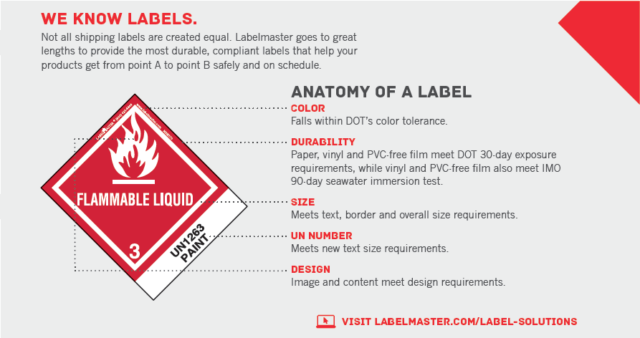
What makes these labels and markings non-compliant?
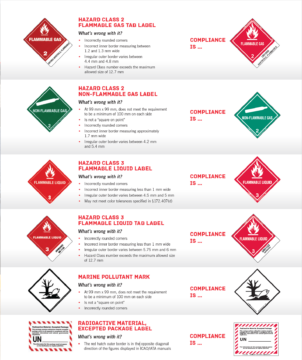
Below are six non-compliant labels and markings, side by side with their compliant Labelmaster counterparts. We’ve detailed the errors and inconsistencies that make these cheaper products non-compliant.
What’s Wrong With This Label?
Read more about Hazmat Label Specifications and Requirements. Visit labelmaster.com/compliance-is to learn more about how Labelmaster can help keep your shipments in compliance.