By Nikki Burgess, DGSA, CDGP
One of the DG world’s most anticipated annual events is the publication of the International Air Transport Association’s (IATA) “List of Significant Changes” for the Dangerous Goods Regulations (DGR).

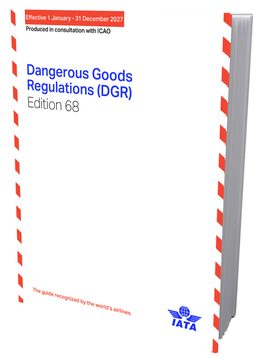
That sought-after summary for the upcoming (in force January 2027) 68th Edition was recently published. It outlines what, to IATA, will be the important changes in the newly revised edition of the DGR in comparison with the edition previous.
It’s important to note that as a general summary rather than an absolutely comprehensive list, the document does not necessarily cover the scope of ALL changes—so, when users get their hands on the new regulatory text, they should have a look at any section that they typically use or that might have relevance to things they do that may be off the “beaten track” of shipments.
It’s entirely possible that there may be things NOT discussed in the change summary document that nevertheless do have changes, and that won’t be evident until the new text itself is available.
Users are responsible for knowing any changes that impact their shipments and applying them correctly. The watchword, always, is “Read the Regs!” With that caveat said, here’s a look at what IATA deems as the most relevant changes to keep your eye on:
How to Use the Regulations
The instructions on how to use the DGRs have been amended to include:
– The application of special provisions to specific shipments
– The selection of the correct packing instructions and packaging types, and;
– The rules for combining multiple dangerous goods in a single package, “All Packed in One”
1.2.7—Exceptions for dangerous goods carried in an aircraft, has been amended to also include the addition of blood and blood components for the purposes of transfusions, primarily for the equipment (which may contain dangerous goods) The exception for data loggers has also been expanded to include certain sodium ion batteries
1.4.2—Information to employees has been clarified to state that an operator’s Operations, Dangerous Goods or other manual must be kept up to date and that operators must establish procedures regarding those dangerous goods that may only be carried by passengers and crew with the approval of the operator
1.4.3—A new paragraph has been inserted which requires operators to consider those dangerous goods that require the approval of the operator, and give thought to the potential for a fire/unsafe condition and how to control the situation until a safe landing can be made
1.4.4—Operators must establish requirements for passengers seeking approval of the operator to carry subject dangerous goods
2.3—A note has been added regarding the intent of “personal use” in respect of the dangerous goods that are permitted to be carried by passengers and crew. Text has also been added regarding the “approval of the operator” and that such approval is required for passengers to carry items subject to that requirement
2.3.0.9—Introduced to address concerns with galvanically separated batteries being carried by passengers (a galvanically separated battery system is a battery pack that has no direct physical electrical connection to the equipment, charger, or other circuits it powers–author)
2.3.1.2 and 2.3.1.4—These have been combined together in reference to prohibited items. A note has been added to confirm that the prohibition on these devices also applies even to devices issued by policing organizations to their employees
2.3.1.4—This now reflects that power banks containing lithium ion batteries exceeding 100 Wh are forbidden from being carried by passengers or crew
2.3.2.4—Wheelchairs/Mobility Aids with Lithium Batteries. This section has been amended to take a greater safety-based focus with lithium ion battery powered mobility aids. The amendments introduce additional requirements for operators carrying mobility aids where the installed battery(ies) exceed 300 Wh per device. For spare lithium ion batteries, the changes include a limit of 300 Wh per device, rather than an unlimited number of batteries. Consistent changes have been made to 2.3.2.2 and 2.3.2.3 re-affirming that the approval of the operator is required. Amendments have been made to portable electronic devices to clarify that the battery allowances are on a “per device” basis.
2.3.5.8—Amended to distinguish between power banks and spare batteries. Passengers and crew are limited to no more than 2 power banks. The previous limit of 20 spare batteries has been reduced to 18. Operators may permit more than 18 spare batteries, but cannot permit more than two power banks
2.5—Changes to this section relate to the crew’s carriage and usage of power banks for purposes related to the operation of the aircraft. Crew wishing to carry and use power banks for personal use are subject to the normal requirements of Section 2.3.
2.6—Dangerous Goods in Excepted Quantities 2.6.2.2 has been amended to clarify that the excepted quantity provisions only apply to substances and not articles

How to ship limited and excepted hazmat quantities by ground, air and ocean.
2.8.1—State Variations States are invited to concurrently contact IATA and ICAO regarding the introduction or amendment of State Variations. Significant changes or new variations have been recorded for 17 States
2.8.3—Operator Variations Users of the DGRs should note that, similar to last year, a number of Operator Variations have been editorially amended to provide for a consistent format, without changing the meaning or intent of the variation. Variations which repeat existing regulations but are not more restrictive have been deleted. Company specific variations, (such as dry ice limits by aircraft type) which are better managed through their own internal procedures have also been amended or deleted. References to COMAT in the operator variations are being removed and a corresponding note has been inserted under 2.5.2.
3.1.1—Definitions and general provisions on the classification of explosives contains minor amendments in the classification of explosive articles
3.2.5.2.5—Amended regarding subsidiary hazard classification
3.2.5.2.6–Includes several additional prohibitions where the aerosol contents also meet the classification criteria for particular classes, divisions or packing groups
3.6.2.2.2.1.3—makes reference to reflect that State related entities may provide additional guidance on classification of infectious substances. An example is when emerging health situations require a quick response in differentiating between UN 3373 and UN 2814/UN 2900
3.9.2.6.1—Addition of paragraph (h) applying to the classification of hybrid batteries composed of lithium ion and sodium ion cells.
3.11.4—Contains additional material regarding the further classification of samples of certain organic substances which may be shipped under the provisions for self-reactive substances Type C.
4.2—List of Dangerous Goods Updates to the list of dangerous goods, includes the following new entries:
● UN 3561Chlorophenols, corrosive, toxic, solid, n.o.s.
● UN 3562Chlorophenols, corrosive, solid, n.o.s.
● UN 3563 Lithium metal batteries installed in cargo transport unit
● UN 3564 Sodium ion batteries installed in cargo transport unit.
- The proper shipping name for Fluroanilines has been deleted and cross references provided for fluroaniline variants
- An entry has been created for Magnetic Resonance Imaging machines to provide a cross reference to the relevant “Article” entry and Special Provision A236
4.4—Special Provisions The following special provisions have been amended:
● A26 and A103 in addition to the existing references to refrigerating machines. These special provisions now include heating machines
● A88 has been amended to remove the uncertainty of what constitutes low and annual production runs
● A107,A185, A213, A225 and A228 now include additional references to lithium/sodium batteries
● A214 contains additional guidance material on the classification, and differences, between battery powered vehicles and battery powered equipment.
The following new special provisions have been included:
● A235 relates to the classification of hybrid batteries, containing both sodium ion and lithium cells or batteries;
● A236 facilitates the transport of modern magnetic resonance imaging (MRI) machines;
● A239 has been introduced, replicating Special Provision A801. Special Provision A801 has been removed
● A808 is a new provision, which will be applied to UN numbers and proper shipping names in Table 4.2 that have been phased out. Phased out UN numbers and proper shipping names will be retained in the dangerous goods list for two years, with the linkage to special provision A808
5–Packing and Packing Instructions Amendments have been made to a number of packing instructions including 130, 200, 220, 222, 378, 459, 497, 570, 603, 650, 950, 951, 952, 955, 962, Y963, 964, 965, 966, 967, 968, 969, 970, 972, 975 and 978. Many changes in the packing instructions relate to the addition of sodium ion batteries and the changed text around prototype batteries. For section II packages in packing instructions 967, 970 and 978 containing no more than 4 cells or two batteries, then any button cells in the equipment do not count towards the 4 cell/2 battery limit
6—Packaging Specification and Performance Tests In Section 6, changes have been made to remain in alignment with the UN Model Regulations and are relevant for all modes of transport
7—Marking and Labelling The previous battery mark with provision for a phone number has been phased out. The old version contains additional information and according to IATA guidance should not form the sole basis for rejection of the package.
Overpacks—the marking requirements for overpacks do not require every single marking on the underlying packages to be replicated on the overpack. IATA states that from a safety perspective, the mark is for the purpose of indicating the total quantities of dangerous goods in the overpack. The note regarding the marking of overpacks has been clarified and an example provided. Where a shipment requires the battery mark as well as other hazard labels other than the Class 9 battery label, then the battery mark is to be placed on the same surface as the other hazard labels
8—Documentation 8.1.6.9.2 Second Sequence—Step 6 has been restructured and re-worded
9—Includes changes regarding the segregation of explosives based on compatibility groups
Appendix A—Glossary There are multiple changes to the glossary which are tied to changes in the UN Model Regulations regarding cylinders, large packagings, salvage packagings and associated editions
Appendix C—Currently Assigned Substances Table C.2 has been updated for the list of organic peroxides from the UN Model Regulations
If you’d like to have a look at the IATA Significant Changes source PDF document itself, here’s a link.

Labelmaster/DGEO is a full-service provider of products, shipping and training software, and professional consulting services to assist the DG and HS&E professional to comply with national and international regulations.
See our full line of solutions at www.labelmaster.com