We are playing catch up. Here are two posts. First, the post for the this week.
One lonely FMCSA ICR is the sum total of relevant regulatory activity over the last week. Sometimes it’s quiet! Meanwhile, Halloween fun falls later this coming week, so be extra careful as the kids are out chasing their goodies or heading to a party or school costume event. Sometimes they forget traffic safety in their excitement. Be alert! Here’s the news:
FMCSA
The agency requested an approval to renew an ICR titled, ‘‘Training Certification for Entry-Level Commercial Motor Vehicle Operators,’’ which will continue to be used to register providers of entry-level driver training and to provide State Drivers’ Licensing Agencies with information on individuals who have completed said training. Find more information here:
Mid-October finds PHMSA issuing some new action in its Special Permit program; all the while the leaves are starting to fall and the weather is changing—make sure your workplace is ready for what’s coming! Here’s the latest news:
PHMSA
The agency has published its latest tranche of Special Permit (SP) actions. Find them at the three links provided:
The Commission issued an interpretive rule that classifies fuel additives as exempt from its container safety requirement for flammable fuel containers under 5 gallons in capacity to feature flame retardant devices. See the interpretation here:
The agency further delayed some reporting requirements related to the industrial use of trichlorethylene solvents and cleaners. See the information about the additional delay here:
Labelmaster/DGEO is a full-service provider of products, shipping and training software, and professional consulting services to assist the DG and HS&E professional to comply with national and international regulations. See our full line of solutions at www.labelmaster.com.
Transport Canada leads the way with news this week about handling and transporting firmware-limited lithium ion batteries. Meanwhile the run-up to Halloween, the first big holiday of the fall season, is well underway, so if you decorate, be sure those ghosts and goblins are properly secured against wind and rain and if a ladder is in your future to help with the install, be sure you use it safely! Here’s the week’s news:
Transport Canada
The Ministry published an interesting guidance document related to the correct treatment of firmware-limited lithium ion batteries in transport. Firmware limited batteries have an integral, manufacturer-installed firmware application that allows for their power rating to be specifically controlled outside of the normal boundaries of its chemistry. As one example, a firmware controlled battery may feature a cell that would, if not limited, exceed the 20wh/cell rating the firmware limits its production to. See this new guidance here:
The agency published an ICR related to its pilot program which allows certain CMV drivers to break up their 14-hour duty period into increments rather than a solid time block. See the ICR here:
A separate but related ICR to that above was also published related to CMV drivers using their trucks’ sleeper berths for split shift driving purposes. See this ICR at the provided link:
Labelmaster/DGEO is a full-service provider of products, shipping and training software, and professional consulting services to assist the DG and HS&E professional to comply with national and international regulations. See our full line of solutions at www.labelmaster.com.
The Consumer Product Safety Commission is busy with lithium battery activity this week, including a comment hearing on a new safety rule as well as an ICR related to button cells. This as the month of October and “Spooky Season” rolls in. Time for cornstalks and pumpkins and yummy fall treats! But meanwhile, check out the last week’s action below:
CPSC
The Commission is holding a public hearing to accept comments on its current effort to draft a rule regarding safety standards for lithium ion batteries in micro-mobility devices and other retail level application. The hearing will be on October 21st. For details on how to participate, see the link:
The Commission has also promulgated an ICR related to its existing safety standards for button cell lithium batteries in retail level products. See this ICR here:
The agency issued an ICR related to its Formaldehyde Safety Standard. Formaldehyde, while not as prevalent in industry settings as it once was, is still used in some applications. See the ICR here:
Labelmaster/DGEO is a full-service provider of products, shipping and training software, and professional consulting services to assist the DG and HS&E professional to comply with national and international regulations. See our full line of solutions at www.labelmaster.com
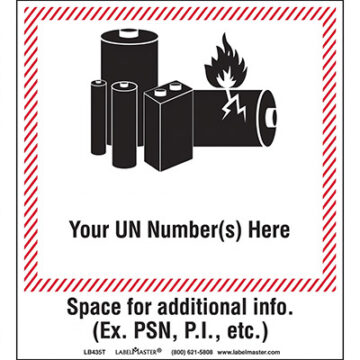
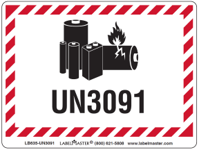
If you ship lithium batteries, there’s a labeling change headed your way starting January 1, 2027.
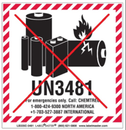
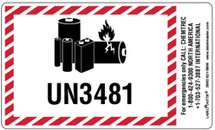
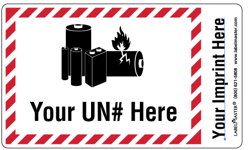
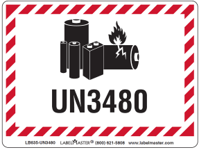
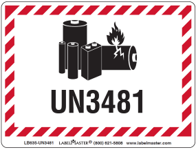
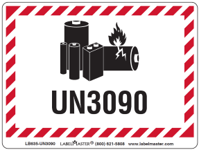
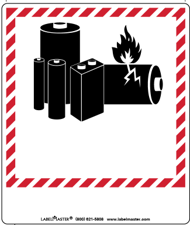
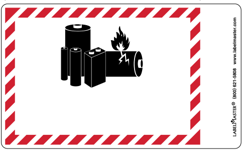
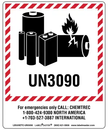
A new DOT regulation, 49 CFR 173.185(c)(3), narrows what’s allowed to appear inside the red hatched border on lithium battery handling labels. Going forward, the only information allowed in that space is the UN number.
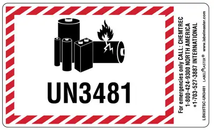
Non-Compliant:Compliant:
That means that phone numbers and the name of an emergency response information provider (ERIP) will no longer be considered compliant.
It’s a small change on paper, but it affects a label a lot of shippers rely on daily.
Why this lithium battery label change is happening
The red hatched area on a lithium battery label exists to communicate urgent handling information at a glance. As a result, regulators have decided to keep that space limited to the UN number alone. Anything else, even something as useful as an emergency contact number, now has to live outside that boundary.
What to do if your labels include a phone number or ERIP name
If your current labels print a company name and phone number or an emergency response provider’s information inside the red hatching, those labels will no longer be compliant once the rule takes effect.
While you can continue ordering the previously compliant labels (at a discount), we recommend buying the new, compliant labels for any shipping you plan to do starting in 2027. In short, now is not the time to stockpile lithium battery labels.
Your lithium battery label options moving forward
Don’t worry: if you still need emergency contact information or additional information on your labels, you can still do that. It simply will be done slightly differently than in the past.
Tabbed labels with phone numbers: If you do want a phone number to stay on the label, it just moves to a tab that sits outside the hatched area rather than inside it. We now offer two tabbed formats for this: a side-tabbed 100mm x 70mm label and a bottom-tabbed 100mm x 100mm label, both built so the contact information is printed on the extended tab rather than the hatched zone.
Standard stock lithium battery labels: If you don’t rely on having a phone number printed on the label itself, our standard stock lithium battery labels remain unchanged and are available in the same sizes as before, with no name or number included.
Blank tabbed labels: If you’d rather control all the information yourself, blank tab labels are available too, giving you the space to print or write in whatever details you need without us pre-populating anything.
CHEMTREC labels: We will continue to support our CHEMTREC customers by selling CHEMTREC lithium battery labels that are compliant with the new regulations.
What lithium battery label buying steps to take next:
Nothing is changing overnight, but it’s worth carefully considering your next lithium battery label purchases.
Labelmaster will stop selling the formerly compliant lithium battery labels on December 1, 2026. And, we’ll be selling them at a discount until then.
So, if you plan to do a lot of lithium battery label shipping in 2026, this is an opportunity to save money on your labels.
If you order lithium battery labels regularly, now’s a good time to check which version you’re using, the speed at which you go through labels, and potentially switch over the new 2027 compliant lithium battery label.
And, finally, the new lithium battery label requirements go into effect on January, 1, 2027.
If you have any other questions on which labels you need, please reach out to our customer success team at orders@labelmaster.com
A new rule that incorporates updated ASME standards for the construction of various tank types and a proposal to revise a hazmat incident reporting form are the only items in an otherwise quiet regulatory week. Meanwhile, the fall season officially began last Tuesday, so be sure your workplace stays ahead of any leaf-clogged gutters and sewer grates that can cause pooling water and contribute to a safety hazard for employees or flood truck docks. Here’s the news:
PHMSA
The agency is amending the Hazardous Materials Regulations (HMR) to incorporate by reference and authorize the use of the 2015 edition of the American Society of Mechanical Engineers (ASME) Boiler and Pressure Vessel Code, Section XII—Rules for Construction and Continued Service of Transport Tanks for the construction and continued service of certain specification cargo tank motor vehicles (CTMVs), cryogenic portable tanks, and multi-unit tank car tanks. See the rule here:
The agency invites comments on proposed updates to the form used for reporting incidents that occur during the transportation of hazardous materials. PHMSA intends to request a revision of a currently approved information collection from the Office of Management and Budget (OMB) for the Hazardous Materials Incident Report (DOT Form 5800.1; Form Approval OMB No. 2137–0039). Revisions include new data elements and clarifications of existing fields. PHMSA has also removed, simplified, or reorganized data elements to reduce the burden on filers and staff, alongside modernizing the form’s visual layout. Comments are due by December 21st, 2026. For more info and instructions on how to view a draft of the proposed revisions, see the link:
Labelmaster/DGEO is a full-service provider of products, shipping and training software, and professional consulting services to assist the DG and HS&E professional to comply with national and international regulations. See our full line of solutions at www.labelmaster.com
One of the DG world’s most anticipated annual events is the publication of the International Air Transport Association’s (IATA) “List of Significant Changes” for the Dangerous Goods Regulations (DGR).
That sought-after summary for the upcoming (in force January 2027) 68th Edition was recently published. It outlines what, to IATA, will be the important changes in the newly revised edition of the DGR in comparison with the edition previous.
It’s important to note that as a general summary rather than an absolutely comprehensive list, the document does not necessarily cover the scope of ALL changes—so, when users get their hands on the new regulatory text, they should have a look at any section that they typically use or that might have relevance to things they do that may be off the “beaten track” of shipments.
It’s entirely possible that there may be things NOT discussed in the change summary document that nevertheless do have changes, and that won’t be evident until the new text itself is available.
Users are responsible for knowing any changes that impact their shipments and applying them correctly. The watchword, always, is “Read the Regs!” With that caveat said, here’s a look at what IATA deems as the most relevant changes to keep your eye on:
How to Use the Regulations
The instructions on how to use the DGRs have been amended to include:
– The application of special provisions to specific shipments – The selection of the correct packing instructions and packaging types, and; – The rules for combining multiple dangerous goods in a single package, “All Packed in One”
1.2.7—Exceptions for dangerous goods carried in an aircraft, has been amended to also include the addition of blood and blood components for the purposes of transfusions, primarily for the equipment (which may contain dangerous goods) The exception for data loggers has also been expanded to include certain sodium ion batteries
1.4.2—Information to employees has been clarified to state that an operator’s Operations, Dangerous Goods or other manual must be kept up to date and that operators must establish procedures regarding those dangerous goods that may only be carried by passengers and crew with the approval of the operator
1.4.3—A new paragraph has been inserted which requires operators to consider those dangerous goods that require the approval of the operator, and give thought to the potential for a fire/unsafe condition and how to control the situation until a safe landing can be made
1.4.4—Operators must establish requirements for passengers seeking approval of the operator to carry subject dangerous goods
2.3—A note has been added regarding the intent of “personal use” in respect of the dangerous goods that are permitted to be carried by passengers and crew. Text has also been added regarding the “approval of the operator” and that such approval is required for passengers to carry items subject to that requirement
2.3.0.9—Introduced to address concerns with galvanically separated batteries being carried by passengers (agalvanically separated battery system is a battery pack that has no direct physical electrical connection to the equipment, charger, or other circuits it powers–author)
2.3.1.2 and 2.3.1.4—These have been combined together in reference to prohibited items. A note has been added to confirm that the prohibition on these devices also applies even to devices issued by policing organizations to their employees
2.3.1.4—This now reflects that power banks containing lithium ion batteries exceeding 100 Wh are forbidden from being carried by passengers or crew
2.3.2.4—Wheelchairs/Mobility Aids with Lithium Batteries. This section has been amended to take a greater safety-based focus with lithium ion battery powered mobility aids. The amendments introduce additional requirements for operators carrying mobility aids where the installed battery(ies) exceed 300 Wh per device. For spare lithium ion batteries, the changes include a limit of 300 Wh per device, rather than an unlimited number of batteries. Consistent changes have been made to 2.3.2.2 and 2.3.2.3 re-affirming that the approval of the operator is required. Amendments have been made to portable electronic devices to clarify that the battery allowances are on a “per device” basis.
2.3.5.8—Amended to distinguish between power banks and spare batteries. Passengers and crew are limited to no more than 2 power banks. The previous limit of 20 spare batteries has been reduced to 18. Operators may permit more than 18 spare batteries, but cannot permit more than two power banks
2.5—Changes to this section relate to the crew’s carriage and usage of power banks for purposes related to the operation of the aircraft. Crew wishing to carry and use power banks for personal use are subject to the normal requirements of Section 2.3.
2.6—Dangerous Goods in Excepted Quantities 2.6.2.2 has been amended to clarify that the excepted quantity provisions only apply to substances and not articles
2.8.1—State Variations States are invited to concurrently contact IATA and ICAO regarding the introduction or amendment of State Variations. Significant changes or new variations have been recorded for 17 States
2.8.3—Operator Variations Users of the DGRs should note that, similar to last year, a number of Operator Variations have been editorially amended to provide for a consistent format, without changing the meaning or intent of the variation. Variations which repeat existing regulations but are not more restrictive have been deleted. Company specific variations, (such as dry ice limits by aircraft type) which are better managed through their own internal procedures have also been amended or deleted. References to COMAT in the operator variations are being removed and a corresponding note has been inserted under 2.5.2.
3.1.1—Definitions and general provisions on the classification of explosives contains minor amendments in the classification of explosive articles
3.2.5.2.6–Includes several additional prohibitions where the aerosol contents also meet the classification criteria for particular classes, divisions or packing groups
3.6.2.2.2.1.3—makes reference to reflect that State related entities may provide additional guidance on classification of infectious substances. An example is when emerging health situations require a quick response in differentiating between UN 3373 and UN 2814/UN 2900
3.9.2.6.1—Addition of paragraph (h) applying to the classification of hybrid batteries composed of lithium ion and sodium ion cells.
3.11.4—Contains additional material regarding the further classification of samples of certain organic substances which may be shipped under the provisions for self-reactive substances Type C.
4.2—List of Dangerous Goods Updates to the list of dangerous goods, includes the following new entries:
● UN 3561Chlorophenols, corrosive, toxic, solid, n.o.s.
● UN 3562Chlorophenols, corrosive, solid, n.o.s.
● UN 3563 Lithium metal batteries installed in cargo transport unit
● UN 3564 Sodium ion batteries installed in cargo transport unit.
The proper shipping name for Fluroanilines has been deleted and cross references provided for fluroaniline variants
An entry has been created for Magnetic Resonance Imaging machines to provide a cross reference to the relevant “Article” entry and Special Provision A236
4.4—Special Provisions The following special provisions have been amended:
● A26 and A103 in addition to the existing references to refrigerating machines. These special provisions now include heating machines
● A88 has been amended to remove the uncertainty of what constitutes low and annual production runs
● A107,A185, A213, A225 and A228 now include additional references to lithium/sodium batteries
● A214 contains additional guidance material on the classification, and differences, between battery powered vehicles and battery powered equipment.
The following new special provisions have been included:
● A235 relates to the classification of hybrid batteries, containing both sodium ion and lithium cells or batteries;
● A236 facilitates the transport of modern magnetic resonance imaging (MRI) machines;
● A239 has been introduced, replicating Special Provision A801. Special Provision A801 has been removed
● A808 is a new provision, which will be applied to UN numbers and proper shipping names in Table 4.2 that have been phased out. Phased out UN numbers and proper shipping names will be retained in the dangerous goods list for two years, with the linkage to special provision A808
5–Packing and Packing Instructions Amendments have been made to a number of packing instructions including 130, 200, 220, 222, 378, 459, 497, 570, 603, 650, 950, 951, 952, 955, 962, Y963, 964, 965, 966, 967, 968, 969, 970, 972, 975 and 978. Many changes in the packing instructions relate to the addition of sodium ion batteries and the changed text around prototype batteries. For section II packages in packing instructions 967, 970 and 978 containing no more than 4 cells or two batteries, then any button cells in the equipment do not count towards the 4 cell/2 battery limit
6—Packaging Specification and Performance Tests In Section 6, changes have been made to remain in alignment with the UN Model Regulations and are relevant for all modes of transport
7—Marking and Labelling The previous battery mark with provision for a phone number has been phased out. The old version contains additional information and according to IATA guidance should not form the sole basis for rejection of the package.
Overpacks—the marking requirements for overpacks do not require every single marking on the underlying packages to be replicated on the overpack. IATA states that from a safety perspective, the mark is for the purpose of indicating the total quantities of dangerous goods in the overpack. The note regarding the marking of overpacks has been clarified and an example provided. Where a shipment requires the battery mark as well as other hazard labels other than the Class 9 battery label, then the battery mark is to be placed on the same surface as the other hazard labels
8—Documentation 8.1.6.9.2 Second Sequence—Step 6 has been restructured and re-worded
9—Includes changes regarding the segregation of explosives based on compatibility groups
Appendix A—Glossary There are multiple changes to the glossary which are tied to changes in the UN Model Regulations regarding cylinders, large packagings, salvage packagings and associated editions
Appendix C—Currently Assigned Substances Table C.2 has been updated for the list of organic peroxides from the UN Model Regulations
Labelmaster/DGEO is a full-service provider of products, shipping and training software, and professional consulting services to assist the DG and HS&E professional to comply with national and international regulations.
PHMSA special permit activity is the main bit of news in an otherwise relatively quiet week—everyone catching their breath after summer fun, maybe. It’s common for the regulatory pace to pick up a bit in the fall, so we’ll see how it goes moving forward. Meanwhile, here’s the week’s report:
PHMSA
The agency released a new tranche of Special Permit (SP) actions. Find the results at the three links below:
The agency issued an ICR related to its medication reporting form for commercial motor vehicle license holders. The form is used by medical examiners to report prohibited substances to follow on health providers. See the ICR here:
Labelmaster/DGEO is a full-service provider of products, shipping and training software, and professional consulting services to assist the DG and HS&E professional to comply with national and international regulations. See our full line of solutions at www.labelmaster.com.
The federal government took action dealing with California’s looming ban on single use propane tanks (popular with campers) and lawsuit in New Jersey over gasoline safety standards as part of this week’s news. Meanwhile, school is back in session now across the country after the Labor Day holiday, so be sure to keep an extra eye out for excited little ones, especially early in the morning. Here’s the week’s summary:
PHMSA
The agency preempted a looming ban in California of single use propane canisters, justifying the action by stating that the ban would have imposed substantively different design and qualification standards from existing, internationally harmonized hazardous materials packaging standard for such propane tanks. See full details here:
In a second preemptive action, the agency dismissed an action in New Jersey that involved a legal case that may have set a precedent for states imposing separate liability standards for training surrounding the road transport of refined gasoline. See details here:
The agency renewed an ICR that deals with the collection of user fees from registrants under the Toxic Substances Control Act (TSCA). See the renewal at the link:
Labelmaster/DGEO is a full-service provider of products, shipping and training software, and professional consulting services to assist the DG and HS&E professional to comply with national and international regulations. See our full line of solutions at www.labelmaster.com.
A request for comments regarding changes to the CPSC’s button/coin cell safety rule is part of the news this week as everyone returns from what was hopefully a fun, safe Labor Day holiday to unofficially wind up the summer. That means it’s also time to start thinking about the changing fall weather coming and how it may impact safety and maintenance at your facility. Plenty to stay busy with! Here’s the week’s news:
CPSC
The Commission’s mandatory rule, Safety Standard for Button Cell or Coin Batteries and Consumer Products Containing Such Products, incorporates by reference UL 4200A, Standard for Safety for Products Incorporating Button Batteries or Coin Cell Batteries. UL notified the Commission that it has revised this incorporated voluntary standard. CPSC seeks comment on whether the revision improves the safety of button cell or coin batteries and consumer products containing such products. Comments must be received by September 17, 2026. Find more details here:
The agency announced an increase in the amount of fees to be collected from carriers under its unified carrier registration system (UCC). The increase is substantial, averaging 20%, depending on the carrier’s exact circumstances. See the details at the link:
Labelmaster/DGEO is a full-service provider of products, shipping and training software, and professional consulting services to assist the DG and HS&E professional to comply with national and international regulations. See our full line of solutions at www.labelmaster.com.
As summer counts down, it’s time to remember that back-to-school is or soon will happen across the country. Lots of excited children up and about much earlier than has been the case for the last few months, so be extra careful for that morning commute. Bring your patience! Meanwhile, here’s last week’s regulatory news:
The Association released its “List of Significant Changes” for the upcoming 68th Edition of the DGR. That edition will be effective next January. Here’s a link to the new document, which as you may have already guessed has changes to lithium ion and sodium ion battery requirements—almost an annual event for the DGR. Find it below:
The agency published an ICR related to its security screening program for commercial drivers (CMVD) that seek to acquire a hazardous materials endorsement to add to their licensing. See this ICR here:
The agency published an ICR related to its safety program for sampling and recordkeeping related to workplaces that feature potential radiation exposure. Find it at the link:
A second ICR related to the agency’s standards for the safety of mechanical power presses, a common feature in many industrial settings. See this ICR here:
2026-16890.pdf Labelmaster/DGEO is a full-service provider of products, shipping and training software, and professional consulting services to assist the DG and HS&E professional to comply with national and international regulations. See our full line of solutions at www.labelmaster.com