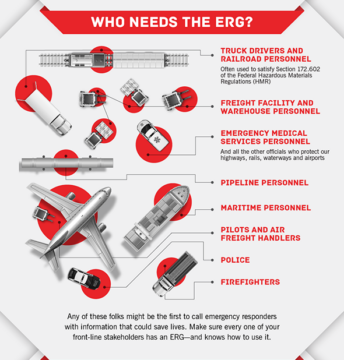
The Emergency Response Guidebook (ERG) provides essential guidance for handling hazardous materials transportation incidents. It’s the official hazmat book used by first responders and hazmat professionals worldwide, and DOT 49 CFR 172.602 requires anyone who handles or transfers dangerous goods to have emergency response information immediately available. The ERG is updated every 4 years and now is…

How Do You Spot a Non-Compliant Hazmat Label
Differences between compliant and non-compliant labels and markings may be had to notice. Shippers often complain about the hair-splitting differences spelled out by hazmat regulations. And while it’s true that a difference of a gram here or a millimeter there isn’t likely to make a shipment any less safe, regulations have to be exact, or…

Infographic | Hazard Class Zodiac
If you’re a Dangerous Goods professional, you believe in science, not superstition. You’d never go in for all that astrological nonsense, would you? Still, even DG pros want to know what the future holds in store. That’s why we created the Hazard Class Zodiac. Find your “sign” to learn everything about your personality, your ideal…
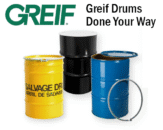
Introducing Greif Drums: The Smarter, Stronger, and More Sustainable Solution for Hazardous Material Storage
When Safety Meets Savings If you work in the chemical, pharma, oil, or battery industry, you know the challenge: finding drums that can handle hazardous materials without compromising safety — or your budget. Too often, businesses pay more for packaging that doesn’t perform better. That’s why DGeo is proud to introduce Greif Drums — the…

Embracing Sustainability in DG Packaging: A Path Forward
The push for sustainable packaging is skyrocketing. In 2024, 48% of companies selling DG products prioritized sustainability, — more than double the number of companies that went eco-friendly in 2023. Overall, as of last year, 81% of companies managing dangerous goods (DG) and hazmat operations have adopted sustainability practices. Meanwhile, traditional packaging is increasingly scrutinized…

Have a hazmat question? Have a phone? Call our DG Regulations Hotline!
Wouldn’t it be great if, the next time you had a question about Dangerous Goods transport—any question at all—you could just pick up the phone and ask an expert? You can. And it’s free. Just call the Labelmaster Regulatory Hotline. Call 1.800.621.5808—8 a.m. to 5 p.m., Central time, Monday through Friday—and ask to speak to…

Label Finder Updates Include International Shipping Options
In the fast-paced world of Dangerous Goods (DG) compliance, selecting the proper shipping label is essential. Without the right labels, DG shipments will be rejected by regulatory authorities and carriers, creating harmful supply chain delays. However, finding the proper label isn’t always quick or easy. In fact, with numerous label options across nine hazmat classes,…

Want more large-format lithium battery packaging options? We’ve got good news.
Large-format lithium batteries power our world—from electric vehicles and energy storage systems to industrial robots and even aircraft. But with great power comes great responsibility, especially when it comes to safe and compliant transportation. That’s why Labelmaster’s DGeo packaging division has partnered with Action Wood 360 to offer easy-to-use collapsible wooden crates for large-format battery…
With the growing proliferation of lithium batteries, here’s how we’ve got safe shipping covered
Lithium batteries power our lives—from smartphones and power tools to hoverboards and e-bikes. But their potential fire risk is so significant that airlines don’t even allow them in checked bags. The lithium battery chain is now expected to grow by more than 30 percent annually for the remainder of the decade, with a market size…

What is master data, and why is it so important for hazmat transport?
What exactly are you shipping? Simple question, right? Not at all. It turns out a lot of shippers don’t know exactly what they’re shipping, and that lack of knowledge has a profound ripple effect on the entire supply chain. I’m talking here about master data—complete, detailed information about a product’s components, makeup, dimensions and origins.…