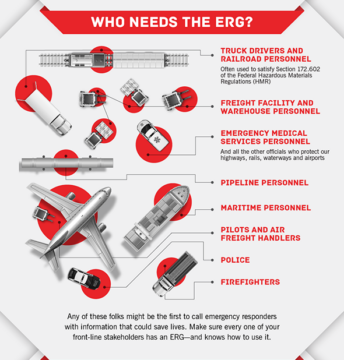
The Emergency Response Guidebook (ERG) provides essential guidance for handling hazardous materials transportation incidents. It’s the official hazmat book used by first responders and hazmat professionals worldwide, and DOT 49 CFR 172.602 requires anyone who handles or transfers dangerous goods to have emergency response information immediately available. The ERG is updated every 4 years and now is…

How Do You Spot a Non-Compliant Hazmat Label
Differences between compliant and non-compliant labels and markings may be had to notice. Shippers often complain about the hair-splitting differences spelled out by hazmat regulations. And while it’s true that a difference of a gram here or a millimeter there isn’t likely to make a shipment any less safe, regulations have to be exact, or…

Want more large-format lithium battery packaging options? We’ve got good news.
Large-format lithium batteries power our world—from electric vehicles and energy storage systems to industrial robots and even aircraft. But with great power comes great responsibility, especially when it comes to safe and compliant transportation. That’s why Labelmaster’s DGeo packaging division has partnered with Action Wood 360 to offer easy-to-use collapsible wooden crates for large-format battery…

With the growing proliferation of lithium batteries, here’s how we’ve got safe shipping covered
Lithium batteries power our lives—from smartphones and power tools to hoverboards and e-bikes. But their potential fire risk is so significant that airlines don’t even allow them in checked bags. The lithium battery chain is now expected to grow by more than 30 percent annually for the remainder of the decade, with a market size…
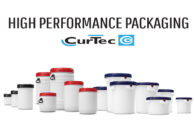
What customers are saying about Labelmaster’s new line of CurTec shipping products
Recently, Labelmaster announced the addition of CurTec high-performance plastic containers, drums and pails to our already robust packaging offering—allowing us to provide the industry’s broadest assortment of UN-certified primary containers. For Dangerous Goods (DG) pros, the lineup may be the right packaging solution to fit their needs for safe and compliant shipping. Here’s what we’ve…

4 ways non-essential hazmat training can boost your career.
Regulations mandate that hazmat employees—i.e., people who directly handle or supervise shipments of Dangerous Goods—be trained to perform their specific functions. To comply with these regulations, you may already participate in training sessions, or be taking one or more online hazmat training courses. That training is mandatory. But what about hazmat training that isn’t mandatory?…
Why lithium battery shippers must examine insurance costs and coverage
Shipping lithium batteries or battery-powered devices is an ongoing challenge. From the everyday batteries that power laptops and games to the larger batteries that power eBikes to the massive ones that power electric vehicles, complying with evolving regulations takes expertise and dedication. But regulatory compliance isn’t the only challenge. What about insurance? In recent years,…

Top 12 questions (and answers) about Capsuloc™ secondary hazmat containers
“Why didn’t someone think of this sooner?” That’s one question we hear a lot about our new Capsuloc™ secondary hazmat containers. They don’t look or work like the metal can exemption shippers Dangerous Goods shippers have used for decades. But once people see all the advantages Capsuloc kits offer, they want to know as many…
DGIS Lithium Battery Advisor Helps Streamline and Simplify Air Shipments of Lithium Batteries
Shipping lithium batteries by air is a challenging task for many shippers – followers of our blog are quite aware of the numerous articles we’ve devoted to the topic over the past several years. While the regulations that have been enacted help guarantee the safety of shippers, carriers and the public, their complex nature is…
How extra testing earned Capsuloc™ secondary hazmat containers a Special Permit
New ideas in Dangerous Goods packaging don’t come along very often. And when they do, they get a lot of extra regulatory scrutiny. Take secondary hazmat packaging kits. For decades, the only option available was the metal can, and all the packaging regulations providing exceptions were written with metal cans in mind. So, when we…